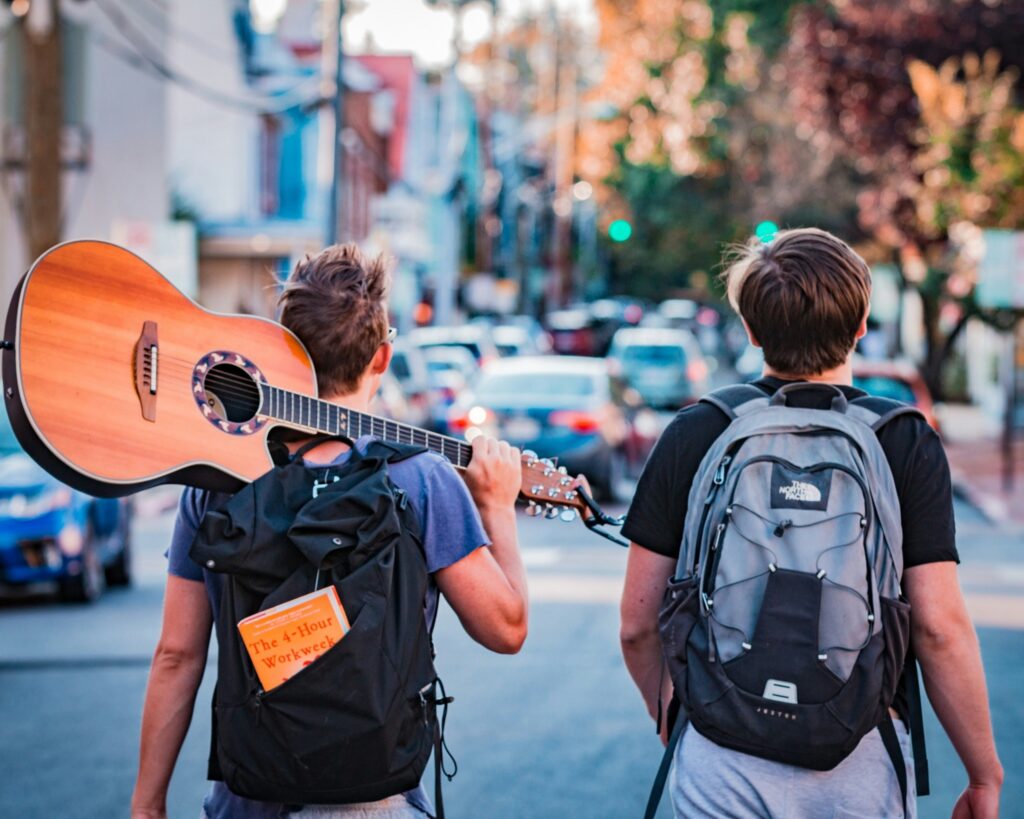
Dreaming of exploring the cobblestone streets of Prague, savoring gelato in Rome, or catching a sunset in Santorini—all without breaking the bank? You’re not alone. Backpacking Europe has long been the ultimate budget travel adventure, but with inflation, rising accommodation costs, and fluctuating exchange rates in 2025, the big question remains: Can you still backpack Europe on $50 a day?
The short answer is yes—but it requires smart planning, flexibility, and knowing exactly where your money goes. Whether you’re a first-time backpacker or a seasoned traveler looking to stretch your euros further, this guide will show you how to make it work. Plus, we’ll introduce you to a powerful trip budget calculator that takes the guesswork out of travel planning.
💡 Ready to plan your Europe adventure? Use our trip budget calculator to get customized budget ranges based on your destination and travel style. It only takes 30 seconds!
Breaking Down the $50 Daily Budget
To understand if $50 a day is realistic, let’s break down typical backpacker expenses across Europe:
Accommodation: $15-25 per night
Hostels remain the backbone of budget travel in Europe. In 2025, expect to pay:
- Eastern Europe (Poland, Czech Republic, Hungary): $10-18 per night for dorm beds
- Southern Europe (Portugal, Greece, Spain): $15-25 per night
- Western Europe (France, Germany, Netherlands): $20-35 per night
- Scandinavia (Norway, Sweden, Denmark): $30-50 per night
Pro tip: Book hostels with kitchens to save significantly on food costs. Couchsurfing and house-sitting are free alternatives if you’re willing to be flexible.
Food: $10-20 per day
Eating like a local is key to staying within budget:
- Breakfast: Grab groceries for DIY meals ($2-4)
- Lunch: Street food, bakeries, or supermarket meals ($4-8)
- Dinner: Cook in hostel kitchens or find budget restaurants ($4-10)
Skip the tourist traps near major landmarks—venture into residential neighborhoods where locals eat for authentic food at half the price.
Transportation: $5-15 per day
Getting around Europe affordably in 2025 means:
- Budget airlines: Ryanair and Wizz Air offer flights as low as $10-30 when booked in advance
- Buses: FlixBus and RegioJet connect major cities for $5-20
- Trains: Regional trains are cheaper than high-speed options; consider a Eurail pass if hitting multiple countries
- Walking and cycling: Free and the best way to explore cities
Average this out, and you’ll spend about $10 per day if you’re strategic about long-distance travel.
Activities and Sightseeing: $5-10 per day
Europe is full of free and low-cost experiences:
- Free walking tours (tip-based)
- Museums with free entry days
- Parks, beaches, and hiking trails
- Architectural landmarks you can admire from outside
Budget for 1-2 paid activities per week (museum entry, day trips, etc.) and you’ll average around $7 per day.
The Total: $45-70 per day
Add it all up, and you’re looking at approximately $45-70 per day depending on the region. Eastern and Southern Europe easily fall within the $50 budget, while Western Europe and Scandinavia require more careful spending or occasional splurges balanced with ultra-budget days.
🎯 Want a personalized budget for your specific itinerary? Try our trip budget calculator to see exactly how much you’ll need based on your travel preferences and destinations!
Where $50 a Day Goes Furthest in Europe (2025 Edition)
Not all European destinations are created equal when it comes to budget travel. Here are the best regions for maximizing your $50 daily budget:
1. Eastern Europe: The Budget Backpacker’s Paradise
Countries like Poland, Czech Republic, Hungary, Romania, and Bulgaria offer incredible value:
- Krakow, Poland: Medieval charm with $12 hostel beds and $3 pierogis
- Budapest, Hungary: Stunning architecture, thermal baths for $15, and hearty goulash for $5
- Sofia, Bulgaria: One of Europe’s most underrated capitals with daily costs under $40
In Eastern Europe, you can comfortably stay under $50 a day while still enjoying occasional restaurant meals and paid attractions.
🔍 Planning to visit Eastern Europe? Search flights to Budapest | Find hotels in Krakow | Book activities in Prague
2. The Balkans: Off-the-Beaten-Path Beauty
Albania, Montenegro, North Macedonia, and Bosnia offer stunning coastlines, mountains, and culture at bargain prices:
- Tirana, Albania: Vibrant capital with daily costs around $35-45
- Kotor, Montenegro: Dramatic fjord-like bay with affordable guesthouses
- Sarajevo, Bosnia: Rich history and the cheapest beer in Europe
3. Portugal and Greece: Western Europe’s Budget Gems
While pricier than Eastern Europe, Portugal and Greece (outside major tourist islands) remain affordable:
- Lisbon and Porto: $50-60 per day is achievable with smart choices
- Mainland Greece: Athens, Thessaloniki, and smaller towns offer better value than Santorini or Mykonos
🔍 Heading to Portugal or Greece? Search flights to Lisbon | Find hotels in Athens | Book activities in Porto
Money-Saving Strategies for Europe in 2025
To make your $50 daily budget work across various European countries, implement these proven strategies:
Travel During Shoulder Season
May-June and September-October offer pleasant weather, fewer crowds, and lower prices on accommodation and flights compared to peak summer months.
Use Budget Travel Apps
- Accommodation: Hostelworld, Booking.com (filter for budget options)
- Transportation: Rome2Rio (compare routes), Omio (book trains and buses)
- Food: Too Good To Go (rescue surplus food from restaurants)
- Activities: Free walking tours, museum free days
Mix Expensive and Cheap Destinations
Balance a few days in pricier cities like Amsterdam or Copenhagen with longer stays in affordable countries like Poland or Romania. This way, your overall average stays within budget.
Cook Your Own Meals
Eating out three times a day destroys any budget. Shop at local markets and supermarkets, and use hostel kitchens. You’ll save $15-25 per day compared to restaurant dining.
Take Advantage of Free Activities
Europe is packed with free experiences: walking tours, parks, beaches, street performances, and architectural marvels. You don’t need to pay for entertainment every day.
📊 Not sure how these strategies affect your specific trip? Our trip budget calculator lets you adjust variables like accommodation type, meal preferences, and activity levels to see exactly how much you’ll spend. Try it now—it only takes 30 seconds!
Sample 10-Day Europe Backpacking Itinerary on $50/Day
Here’s how a realistic $50-per-day budget might look across a 10-day trip:
- Days 1-3: Krakow, Poland ($40/day) – Hostel ($15), food ($12), activities ($8), local transport ($5)
- Days 4-6: Budapest, Hungary ($45/day) – Hostel ($18), food ($15), thermal baths + sightseeing ($10), transport ($2)
- Days 7-8: Vienna, Austria ($65/day) – Hostel ($25), food ($20), museums ($15), transport ($5)
- Days 9-10: Prague, Czech Republic ($48/day) – Hostel ($20), food ($15), castle entry ($10), transport ($3)
Total 10-day budget: $490 (averaging $49/day)
Notice how mixing one pricier destination (Vienna) with three budget-friendly cities keeps the average at $50 per day. The key is flexibility and balance.
When $50 a Day Won’t Be Enough
Let’s be realistic: some situations push you over the $50 threshold:
- Western Europe cities: London, Paris, Amsterdam, Zurich regularly require $70-100+ per day for budget travel
- Scandinavia: Norway, Sweden, Denmark, and Iceland are notoriously expensive ($80-120/day minimum)
- Peak season travel: July-August prices skyrocket in popular destinations
- Frequent flights: Constantly hopping between countries adds up quickly
- Solo travel: You can’t split accommodation or transportation costs
If your itinerary includes these factors, adjust your budget accordingly or spend extra time in cheaper regions to balance out the costs.
The Bottom Line: Yes, But With Strategic Planning
Backpacking Europe on $50 a day in 2025 is absolutely possible—but it’s not universally achievable across all destinations. Success depends on:
- Choosing budget-friendly countries (Eastern Europe, Balkans, Portugal, Greece)
- Traveling during shoulder season
- Staying in hostels and cooking most meals
- Using budget transportation options
- Balancing splurges with ultra-budget days
The most important factor? Planning ahead with accurate budget expectations. Guessing your costs leads to overspending and travel stress. That’s where a trip budget calculator becomes invaluable.
✈️ Ready to turn your Europe backpacking dream into reality? Use our trip budget calculator to create a personalized budget based on your exact itinerary, travel style, and preferences. Get started in just 30 seconds and travel with confidence!
Final Thoughts
Europe remains one of the world’s most rewarding backpacking destinations, and with smart planning, a $50 daily budget can unlock incredible experiences. From the fairy-tale castles of Prague to the sun-soaked beaches of Albania, adventure awaits—regardless of your wallet size.
The key is knowing your numbers before you go. Don’t leave your budget to chance. Use data-driven tools to plan accurately, book strategically, and spend confidently. Your European adventure is closer than you think.
🌍 Start planning your budget-friendly Europe trip today! Visit Trip Budget Calculator to create your personalized travel budget and make your backpacking dreams a reality.
Have you backpacked Europe on a budget? What’s your daily spending sweet spot? Share your tips and experiences in the comments below!